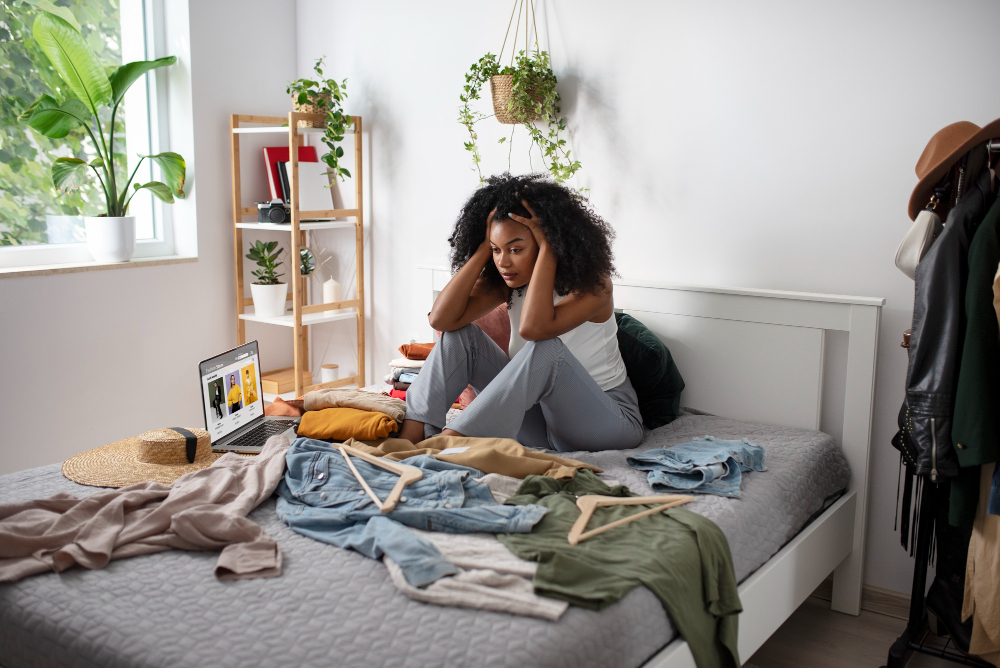
There is a particular kind of disappointment that comes with trying on an outfit you used to love and realising it no longer sits the way you remember. The zip suddenly needs negotiation, the waistband feels less forgiving, and something that once made getting dressed easy now leaves you standing in front of the mirror wondering what happened.
The first thought is often practical: I need new clothes.
And sometimes, you probably do. Bodies change, seasons change, and there is absolutely nothing wrong with buying clothes that fit the body you have now. In fact, wearing clothes that fit properly usually feels far better than forcing yourself into a size that no longer serves you.
But before you replace half your wardrobe, it may be worth asking another question.
What has changed in your life since those clothes fitted comfortably?
Perhaps work now keeps you seated for most of the day. The evening walks quietly disappeared. You drive almost everywhere. The gym membership you were excited about has become a monthly debit alert you barely notice, and the promise to “start again next week” has somehow survived several next weeks.
Sometimes the clothes are simply telling you something your routine has been trying to say for a while: you may need to move more.
Sometimes it is not really about the clothes
We often notice changes in our bodies through clothing before anything else.
You may not own a scale or care much about numbers, but you know how your favourite trousers used to feel. You know when climbing a flight of stairs suddenly feels harder than it used to, when your energy drops halfway through the day, or when you realise that an entire week has passed without doing anything that made your body genuinely move.
None of this means you need to panic about your weight.
It simply means your body gives you information.
And when several things begin changing at once — your clothes feel tighter, you feel less energetic, your stamina has dropped and your daily routine has become increasingly sedentary — buying another pair of trousers may solve the immediate wardrobe problem without addressing what is happening underneath it.
Movement is not only about becoming smaller. Regular physical activity supports heart health, muscle strength, sleep, mood and everyday energy, which is why health guidance consistently encourages adults to make movement part of ordinary life rather than treating exercise only as a weight-loss project.
The goal is not necessarily to “get your old body back,” but to get your body moving again.
Think about how much your routine has changed
One of the easiest ways to gain weight gradually is to change almost nothing about what you eat while dramatically changing how much you move.
Maybe you once walked to work, climbed stairs regularly or spent weekends moving around, and now most of your day happens between a chair, a car and a sofa.
Perhaps motherhood changed everything. Between school runs, work, cooking, bedtime routines and taking care of everyone else, exercise became something you would return to when life became less busy.
Perhaps your job became more demanding and suddenly you spend eight or ten hours sitting in front of a screen.
You often do not notice these changes at first, because they happen little by little.
That is why sometimes the answer is not an extreme diet, a punishing workout program, or throwing away everything in your wardrobe.
Sometimes the first answer is simply to start moving again.
Start with the kind of movement you can actually sustain
The biggest mistake many people make when they decide to “get serious” is choosing a routine that bears no resemblance to their real life.
You have not exercised properly in months, then suddenly decide you will wake up at 5 a.m., go to the gym six days a week, stop eating everything you enjoy and somehow maintain this new personality forever.
By the second week, life happens.
Then you feel as though you failed.
You did not necessarily fail; you may simply have started with a plan that was too difficult to live with.
Walking counts.
A thirty-minute walk after dinner counts. Taking the stairs more often counts. Dancing in your living room counts. Strength training twice a week counts. Swimming, cycling, Pilates, skipping, home workouts and going to the gym all count.
The best exercise is not always the hardest one. It is often the one you can repeat consistently enough for it to become part of your life.
Even fashion and lifestyle conversations around exercise have shifted away from the idea that fitness has to mean punishing yourself. In a recent Marie Claire piece, stylist Mecca James-Williams described moving away from the “gym warrior” mentality and toward walking, Pilates and strength training that suited the way her body and energy had changed.
That is a healthier place to begin.
Your wardrobe can become information, not punishment
There is a difference between noticing that your clothes no longer fit and using your wardrobe to make yourself feel bad.
The first can be useful.
The second rarely is.
If every morning becomes an argument between you and a pair of jeans that no longer fits, put the jeans away for now. Wear clothes that allow you to breathe, move and feel good while you decide what you actually want for yourself.
Your wardrobe should not become a daily reminder that your body has changed.
At the same time, you do not have to pretend that every physical change feels good to you.
Body acceptance does not mean you are forbidden from wanting to feel stronger, fitter or more comfortable in your clothes. It simply means you do not have to hate yourself into making those changes.
You can appreciate your body and still decide that you want to take better care of it.
You can buy a dress in the size that fits today and still start walking tomorrow.
Those two things do not contradict each other.
Do not make the scale the entire story
Once people decide to start exercising again, it is easy to become obsessed with weight.
But there are other things worth noticing.
Maybe you stop getting breathless so quickly. Your sleep improves. Your clothes sit more comfortably. You feel stronger carrying groceries. You have more energy in the afternoon. Your posture improves, your mood lifts and you begin to feel more connected to your body again.
Those changes matter too.
In fact, they may keep you going long after the excitement of starting a new routine disappears.
Because the truth is, most of us do not need another temporary “weight-loss era.”
We need habits we can live with.
And perhaps you still need new clothes
There is also another possibility: you start exercising, feel stronger, have more energy, and some of those old clothes still do not fit.
That is okay.
Bodies change with age, pregnancy, hormones, muscle gain, lifestyle and simply being alive. There is no prize for squeezing yourself back into something you wore five years ago.
The real goal is not to force yourself into an older version of your body. It is to care for the body you have now, dress it well, move it often and feel good in it again.
So yes, buy the trousers that fit. Tailor the dress if it needs adjusting. Let go of the clothes that no longer make you feel good.
But perhaps do something else too.
Take the walk.
Join the class.
Use the gym membership.
Move your body enough to remember how good it feels to use it.
Maybe the wardrobe is not asking for more clothes
The next time you stand in front of your wardrobe convinced that everything suddenly looks wrong, resist the urge to immediately fill an online shopping basket.
Look at your routine first.
When was the last time you moved simply because your body needed movement? When did you last do something that challenged your strength, raised your heartbeat or reminded you that your body was made to do more than move between a desk, a car and a sofa?
Perhaps you genuinely need a few new clothes.
But perhaps what you need even more is to feel like yourself again — stronger, more energetic and more at home in your body.
And sometimes, that does not begin in a fitting room.
It begins with putting on your trainers and moving.
Did this story speak to you?
Leave a little love for the words that stayed with you.